TLDR: The BolderBoulder 10K closes major streets across central Boulder from as early as 6:00 AM through early afternoon every Memorial Day. A party bus or charter bus drops your running group near the start corrals before closures lock the approach routes, stages clear of the course while you race, and meets your group at a pre-arranged point outside the Folsom Field finish perimeter when it's over — no parking hunt, no rideshare that can't find you inside a closure zone.
Memorial Day morning in Boulder has a rhythm that first-timers almost always underestimate. The BolderBoulder 10K — one of the largest road races in the country since 1979, drawing roughly 50,000 participants — threads through central Boulder neighborhoods and finishes on the turf inside Folsom Field. That finish is one of the race's genuine highlights.
The getting-there and getting-home logistics are not. Road closures go up across 30th Street, Baseline Road, Arapahoe Avenue, and a web of residential streets as early as 6:00 AM. Parking near the start and finish fills before most waves begin.
And once 50,000 finishers stream out of the stadium, the streets around Folsom Field are effectively closed to vehicle traffic for hours. One bus, planned in advance, solves all three problems in a single move.
boulderpartybuscompany.com connects your group with party buses, charter buses, and minibuses from transportation providers serving Boulder — you compare vehicles and request estimates through one form instead of calling providers one by one. Whether you are organizing a corporate running team, a running club with assigned corrals, or a group of spectators who want to catch the stadium finish, here is exactly how race-day group transportation works.
Why a Bus Makes the BolderBoulder Work for Groups
The BolderBoulder creates three specific logistics problems that a private bus addresses directly.
Road closures trap cars. The course cuts across 30th Street, Arapahoe Avenue, Baseline Road, Colorado Avenue, and residential streets throughout central Boulder. Once closures go up, people who planned to park near the stadium discover the approach roads they needed are already gone.
A bus that knows its drop zone and arrival window gets there before closures tighten — and actually reaches the destination.
Parking near Folsom Field effectively doesn't exist on race morning. CU Boulder event parking fills on normal game days; on BolderBoulder morning with tens of thousands of participants converging on the same corridor before 7:00 AM, the nearby lots are at capacity before the first wave fires. A bus drops your group at the right spot and removes parking from the equation entirely.
Post-race rideshares cannot reach the stadium. Colorado Avenue and the immediate streets around Folsom Field are too congested with finisher foot traffic and too close to active closure zones for rideshare cars to navigate reliably during the finish window. Getting picked up after the race is harder than getting dropped off before it.
With a bus, you pre-arrange a staging point outside the perimeter and walk to it — a short walk versus an indefinite wait for a car that cannot reach you. For Boulder sporting event transportation, the BolderBoulder is one of the most road-closure-intensive situations on the annual calendar.
BolderBoulder Road Closures: What Your Drop-Off Plan Must Account For
The BolderBoulder course runs 6.2 miles from its start corrals near 30th Street and Walnut Street through central Boulder neighborhoods, finishing on the turf inside Folsom Field (2400 Colorado Avenue, Boulder, CO 80309). The closure footprint changes the viable approach routes for any bus dropping off runners.
The key closure zones to understand before planning your route:
- 30th Street at Walnut / Arapahoe: Start corral area. Closures begin before the first 7:00 AM wave. A bus arriving by 6:15–6:30 AM from the north via Folsom Street can still access the drop zone; after approximately 6:45 AM the approach routes narrow significantly.
- Baseline Road: The course crosses Baseline, cutting east-west movement through central Boulder for the duration of the race. Routing to any pickup point south of the course must plan around this.
- Colorado Avenue near Folsom Field: The finish-area approach. Heavy pedestrian traffic from finishers runs from approximately 7:45 AM through 1:00 PM — the most complex post-race navigation zone of the day.
- Residential streets along the course: The race winds through neighborhoods north of Pearl Street, restricting access along that corridor through most of the morning.
The official BolderBoulder website publishes the current year's course map and closure details each spring — check it before finalizing your drop-off and pickup plan, because timing and affected streets shift slightly year to year. The start on 30th and Walnut and the finish at Folsom Field are the constants. For general Folsom Field approach logistics beyond race day, the Folsom Field group transportation guide covers the stadium's standard parking and drop-off setup year-round.
Drop-Off: Getting Runners to the Start on Time
Wave starts run roughly every 15–20 minutes beginning at 7:00 AM, with elite women at 10:45 AM and elite men at 11:00 AM. Your drop-off timing depends entirely on which wave your group is assigned to. For early-wave participants, the bus needs to be loading and moving by 5:45–6:00 AM to reach the 30th and Walnut drop zone before 6:30 AM.
For groups with a spread of corral times — faster runners in early waves, walkers in late-morning waves — a staggered loading plan or a single early drop followed by a later return trip is worth building into your estimate request.
The practical drop zone for runners is the area around 30th Street and Walnut Street, approached from the north on Folsom Street before closures tighten that corridor. For buses arriving before 6:30 AM, access from the north is generally still open. After 6:45 AM, corral staff and event management begin blocking vehicle approach.
Get there early, and the whole operation is smooth — miss that window, and the bus is navigating around closures while your runners are watching their wave depart without them.
The single biggest logistics win on BolderBoulder morning: a bus that reaches the 30th and Walnut area before 6:30 AM means no road-closure scramble, no parking hunt, no sprint to the corral. That is the whole value of booking race-day transportation in advance.
Post-Race Pickup: The Part That Catches Groups Off Guard
Getting your group out of the Folsom Field area after the race is genuinely harder than getting them there. Every participant who finishes walks through the stadium, collects their finisher medal, and exits onto Colorado Avenue — creating a continuous pedestrian flow from approximately 7:45 AM through 1:00 PM as 50,000 finishers work through the finish chute. Colorado Avenue and the surrounding streets are either closed to through traffic or effectively impassable during that window.
Rideshare cars cannot navigate the closure zone reliably, and cell service near the stadium under Memorial Day load is unpredictable enough that "text me when you finish" is not a real plan.
The solution is a pre-arranged staging location outside the closure perimeter. Rather than navigating a bus into a closed zone, a staging spot is set in advance — a surface lot on the east side of campus, a side street on Folsom a few blocks north, or another agreed-upon point — and your group walks to the bus instead of waiting for a rideshare that cannot reach them. That is a five-to-ten-minute walk versus an indefinite wait.
Set the post-race meeting point and share it with every person in the group before anyone crosses the start line. This staging detail is part of the estimate for BolderBoulder trips — it is standard race-day trip planning, not an afterthought.
What Size Bus Does Your Group Need?
Most BolderBoulder groups are moving runners and spectators — not elaborate tailgate setups. The focus is on timing precision, comfortable seating, and enough storage for dry-clothes changes and post-race recovery gear.
| Vehicle | Seats | Best for | Race-day advantage |
|---|---|---|---|
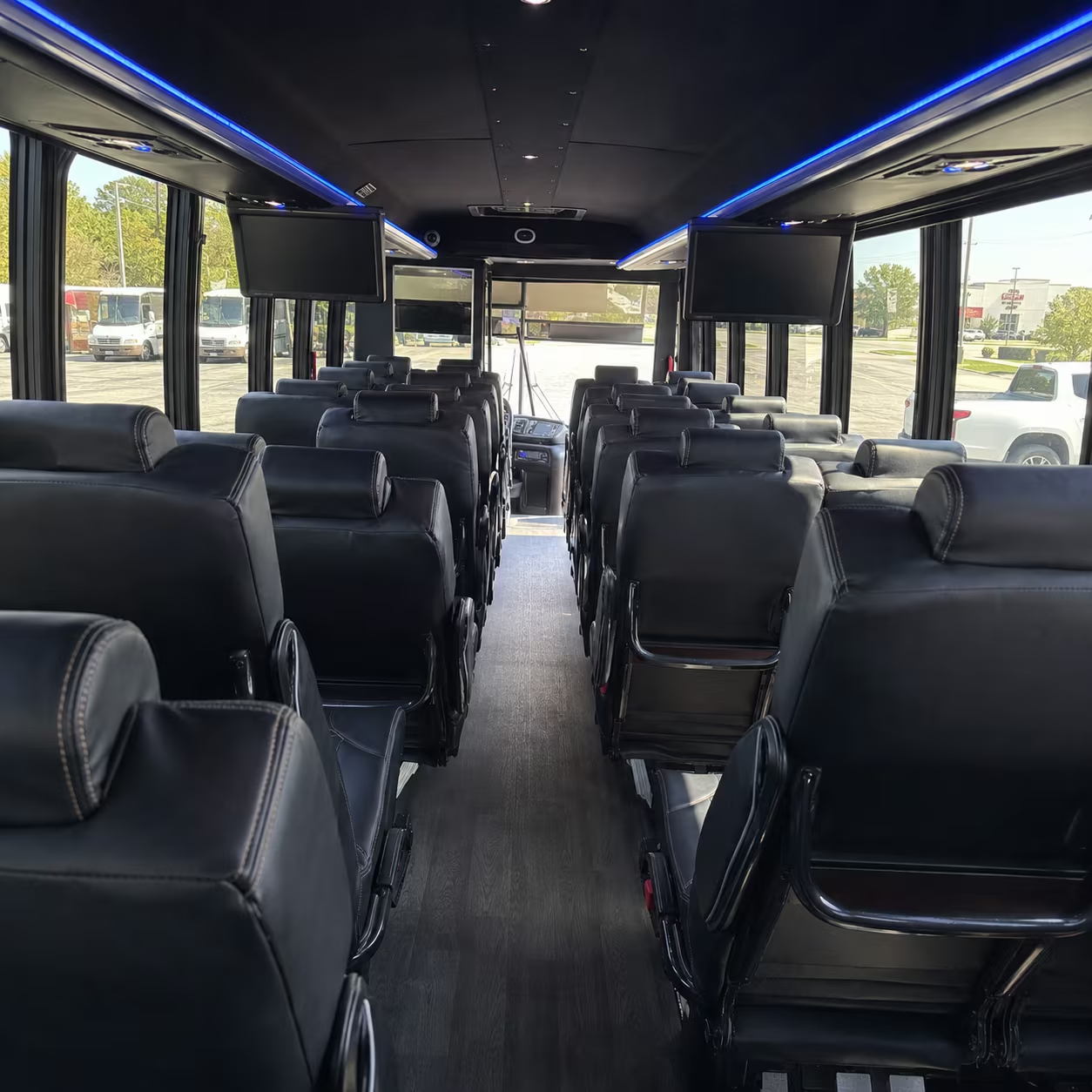
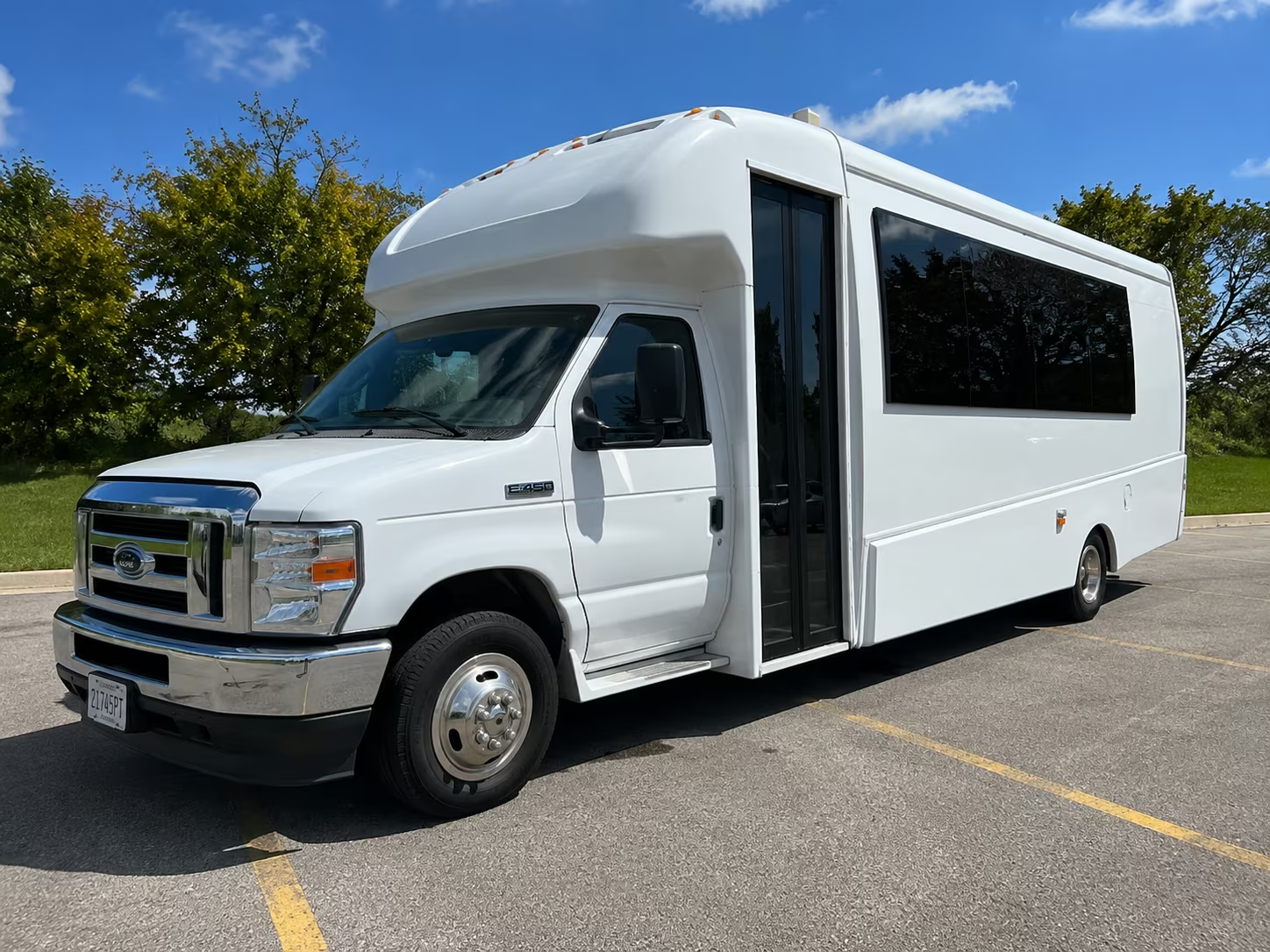
| 15–35 passenger minibus | 15–35 | Running clubs, office groups, mixed runner/spectator crews | Overhead storage for race bags and dry clothes; powerful A/C for the post-race return |
| 30-passenger party bus | ~30 | Groups that want a celebration-ready setup for after the race | Built-in bar, LED lighting, and Bluetooth sound for the post-race trip |
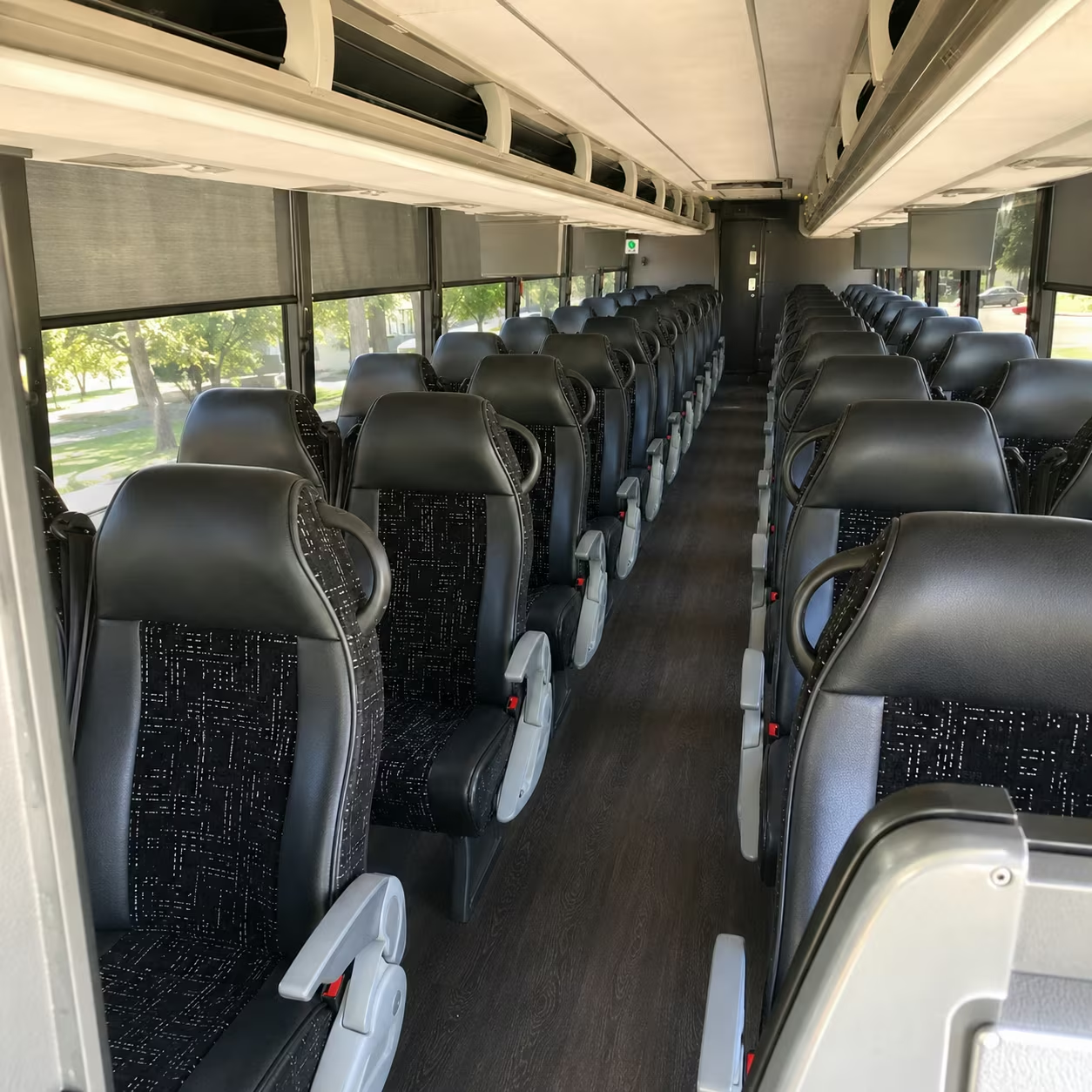
| 40–56 passenger charter bus | 40–56 | Large corporate teams, running clubs with 40+ members, groups coming from Denver | Undercarriage bays for gear and supplies, onboard restroom, climate control for the 45-minute Denver corridor run |
For groups in the 20–35 person range, a minibus handles race-day logistics cleanly — overhead storage, a smooth ride for tired legs, and enough A/C to matter on a Memorial Day afternoon in Colorado. For groups coming up from the Denver metro, a full-size charter bus picks up across multiple neighborhoods and gets everyone to the start corrals on a single vehicle. Compare the full vehicle options to see what fits your headcount and your post-race plan.
BolderBoulder Bus Prices: Example Planning Ranges
Actual quotes depend on vehicle size, total hours, pickup location, and availability on Memorial Day weekend. These are example price ranges to give you an idea — not current market data or a guaranteed price:
- 15–35 passenger minibus: $150–$300/hour (example)
- 30-passenger party bus: $200–$380/hour (example)
- 40–56 passenger charter bus: $175–$325/hour, or roughly $1,400–$2,600 for a day rate (example)
A typical BolderBoulder run for a group of 28 covers roughly 4–5 hours of total rental time: early-morning pickup, pre-race drop, race-duration staging, post-race pickup, and a return trip. Split that across 28 people and the per-head cost is often competitive with what the same group would spend on gas, parking, and post-race rideshares — with no one responsible for driving. See the Boulder party bus prices page for a broader look at what shapes the final number.
Memorial Day weekend is one of the most in-demand weekends for group transportation across the Front Range. Request estimates 6–8 weeks before race day. The right vehicle goes to the group that planned ahead.
Call 720-684-0670 any time to discuss your BolderBoulder transportation needs.
How Race Day Flows with a Bus
A race-morning plan for a group of 28 runners departing from a central Boulder hotel:
- 5:45 AM — Bus loads at the hotel. Bibs are pinned, gear bags are packed, everyone is accounted for.
- 6:15 AM — Drop-off on 30th Street near Walnut, before main corral closures. Early-wave runners walk directly to their assigned corral.
- 6:30–7:00 AM — Bus stages north of the closure zone at a pre-arranged spot, holding dry clothes, post-race gear, and recovery snacks.
- 7:00 AM–11:30 AM — Race runs. Bus holds gear at the staging location.
- 11:30 AM — Group meets the bus at the pre-arranged staging point outside the Folsom Field closure perimeter — a short walk from the stadium exit.
- Noon onward — Bus heads to the post-race destination: Pearl Street for brunch, a local brewery, or back to the hotel.
That last stop is worth building into the plan. Memorial Day afternoon around Pearl Street Mall is one of Boulder's most social days of the year, and a bus that carries your group from the finish line to brunch or a brewery makes the BolderBoulder a full-day event rather than just a race. For groups that want to turn the post-race afternoon into a Front Range tasting tour, the Front Range brewery and distillery tour guide has the route planning detail that pairs well with a recovery beer or three.
Frequently Asked Questions
Where does the BolderBoulder start and finish?
The race starts near 30th Street and Walnut Street in Boulder and finishes inside Folsom Field (2400 Colorado Avenue, Boulder, CO 80309), where participants run their final stretch on the stadium turf. The stadium finish is one of the race's signature experiences — and the reason post-race pickup requires a staged meeting point outside the Folsom Field perimeter rather than a standard curbside rideshare. For groups already planning a Buffaloes game or stadium concert, the logistics on race day and on a standard fall game day overlap more than you'd expect.
When do road closures start on BolderBoulder morning?
Closures near the start corrals begin as early as 6:00 AM. The finish-area streets around Folsom Field see heavy pedestrian management from approximately 7:45 AM through 1:00 PM. For a bus dropping early-wave runners, the target arrival at 30th and Walnut is before 6:30 AM.
Always confirm the current year's closure timing and affected streets at the official BolderBoulder website before finalizing your plan — the race publishes updated closure maps each spring.
Can a rideshare get my group to and from the race?
Getting there before closures: possible, but timing-sensitive, and surge pricing starts early on Memorial Day morning in Boulder. Getting picked up near Folsom Field after the race: genuinely difficult — streets around the stadium are too congested with pedestrian traffic and too close to active closure zones for rideshare cars to navigate reliably during the finish window. A bus with a pre-arranged staging point outside the perimeter solves both problems, and the per-person cost for a group of 25 or more is usually comparable to coordinating that many individual rideshares.
What vehicle works best for a group of 20–35 runners?
A 15–35 passenger minibus handles most groups in that range well — overhead storage for race bags and dry-clothes changes, solid A/C for the return trip, and enough room that nobody is stacked uncomfortably after a 10K. For groups that want a celebration-ready setup for the post-race ride, a 25-passenger party bus or 28-passenger party bus adds the atmosphere. Request estimates for both and compare what is available for your race date.
Does the bus wait during the race?
Yes. The bus is booked as a block of hours, so it stages at a pre-arranged location outside the closure zone, holds your gear, and is ready at the agreed meeting point after you finish. Confirm the staging location and post-race pickup window when you request estimates — that detail gets locked in before race morning, not figured out on the fly while your group is walking out of the stadium.
Can groups coming from Denver or elsewhere in the Front Range request a bus?
Yes. A significant portion of BolderBoulder participants travel from the Denver metro on race morning. Transportation providers serving Boulder cover the full Front Range corridor — a charter bus picking up across multiple Denver neighborhoods on the way to Boulder is a common Memorial Day request.
The Denver party bus rental page covers options starting from the Denver side, and the full service area covers the region in between.
How early should estimates be requested?
Request estimates at least 6–8 weeks before race day. Memorial Day weekend is the busiest spring transportation weekend in the Boulder-Denver corridor — the right vehicles fill first, and waiting until two weeks out means working with whatever remains at whatever rate is still open. For corporate teams coordinating multiple vehicles or a fleet for a large running group, 8–10 weeks of lead time gives you the comparison options and flexibility you need to get the right vehicle at the right price.
Plan Your BolderBoulder Race-Day Bus
Race morning is stressful enough without adding road-closure navigation and parking strategy on top of it. One bus handles the early drop, the staging during the race, the post-race pickup from the right spot, and the celebration ride after — your group runs the race, not the logistics. boulderpartybuscompany.com connects you with party buses, charter buses, and minibuses from transportation providers serving Boulder, so you compare options and request estimates in one place without calling providers one by one.
Memorial Day weekend fills fast. Request your BolderBoulder transportation estimates early — call 720-684-0670 any time, or use the quote form to compare vehicles and rates from providers serving Boulder. For groups making a full day of it beyond the race, the Boulder group transportation services page covers every type of trip the network handles across the city and the surrounding Front Range.